What Flowers May Come: A Conversation with Poet Sarah Durrand
Conversation
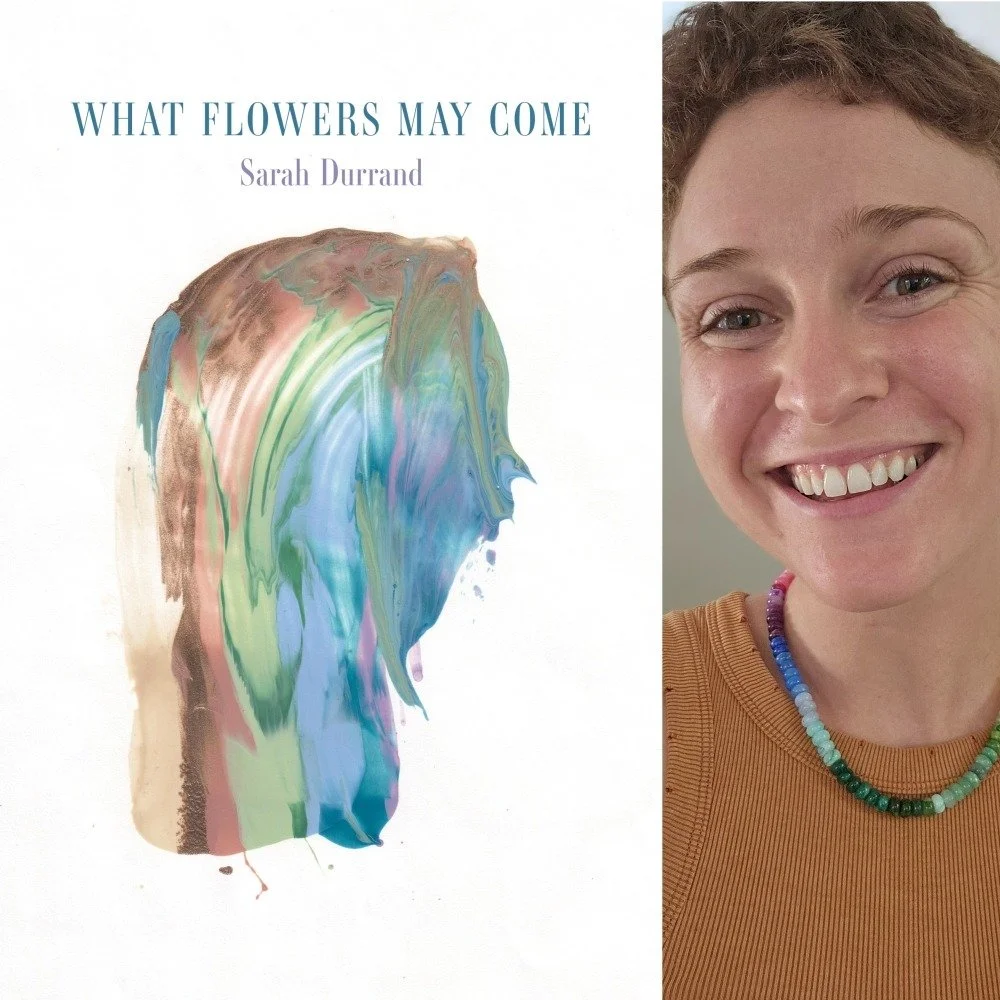
CovEr ARt / Author Photo
What Flowers May Come by Sarah Durrand
BTL: To start us off, What Flowers May Come, was published by Finishing Line Press this past February. How's it feel to have your book out in the world?
Sarah Durrand: It feels very surreal and wonderful. I'm very humbled. It's been a lovely point of community and connection within my own personal web to have friends talk to me about it. And everyone says they have a different favorite poem, which is lovely to me. I was really worried it was going to be disappointing. You know, it's my debut collection, and I was really, for some reason, preparing myself that something about it was gonna feel strange or like a letdown. And I'm so grateful now that I’m in it, I didn't feel that disappointment. I just felt a really big sense of pride and gratitude to everyone that made it happen. So, it's been really lovely and I'm excited to keep the momentum going.
I find there's a kind of dread that we can feel when our dreams become real, when we're in the moment experiencing the thing, and I think it's so wonderful that when the moment came, you were able to step into a sense of pride and joy for your accomplishment. You mentioned that the work was inspired in part by a near-death experience…
Tell us a little bit about that experience, how it shaped you and the collection itself.
Yeah, absolutely. So, I did have a near-death experience just a little over a year ago, but this particular collection had actually mostly existed by then—with a couple of exceptions. I live with an autoimmune disease that was related to the near-death experience. So even though the collection existed, boy, was the near-death experience a real kick in the pants to finally act on it. Shout out to the folks at Finishing Line Press. They were actually waiting for me to sign the paperwork at the time. I was hemming and hawing to that point of dread. Like, oh boy, is this the right time? Am I ready to release this? And then, I almost died. There was a lot of subsequent reflection about how I wanted to spend my time and energy in life, what I was chasing for good reason versus no reason, and what I was afraid of. I can’t say that it was a joyful time, but it was very insightful and ultimately affirming. After that, I went yeah, I think I'm ready to release this. I certainly came out on the other side with a better appreciation for the sheer act of creation, and a better sense of my values and direction.
I think there's a level of awareness that you're describing that is so important for creative practices. Writers are often observers by trade, so the ability to pause, connect, and dig deep is an integral part of our work. Can you talk about your relationship with resilience, starting over, and rebuilding yourself through art?
Resilience is a virtue in my family. I recall my dad once saying he thought it was one of the most important qualities a person could have. This belief instilled in me, that I can remain rooted and centered no matter the circumstance, of course informs how I move forward from things like my near-death experience. I think creation of any sort—painting, music, poetry—involves tenacity, especially since creation so often comes from duress. To make art, there's a commitment to feel, persevere, explore, and ultimately transform these experiences, good and bad, and to welcome more.
A lot of my poetry lives in small moments; I enjoy diving into the glimmer of those little moments. Almost dying was a salient reminder to dive deep into this crazy world and feel all of it, to take every small moment as it comes. Rebuilding is a continual process, I believe. If we try to move through life aware of ourselves and our impact, then I think every day is starting over. That doesn't mean it's a blank slate every day, but we're always fine-tuning and readjusting. I use art as sort of a way to contextualize and define my experiences. I strongly believe that even though a moment or an experience might be finite, its impact, what it means for us, and how we define it is never finite. It's never ending.
A concept that I return to is this idea that healing isn’t a linear process. Some people describe growth as a spiral. So, while the circumstance, feeling, or memory we interact with may be familiar, we have changed, evolved, and hopefully, carry more wisdom into that experience. You have a beautiful way of preserving a moment or feeling, and making of it an artifact.
Thank you. Something that's fun about those poems too, is often when we talk about rebuilding it is from large things, from traumas and big griefs. But I love that we can rebuild from small things too. We can build from being super annoyed at our coworker one day. And to your point, we're never the same person and we get to choose at every moment how we proceed forward. Writing is just such a wonderful way to solidify those thoughts in that moment.
Read “Citrus Pleasure, pt. ii” 🍋 in BTL Issue 14 Re:Build
🍋
Read “Citrus Pleasure, pt. ii” 🍋 in BTL Issue 14 Re:Build 🍋
How else has your upbringing shaped your philosophy as an artist?
Well, we were a house that read a lot, and I was more into fiction than nonfiction. But writing didn’t really enter my life until late high school and early college; credit has to go to my parents. As a younger person finding my passion and place in the world, they said to me, “Whatever you do in life, you need to write.” It was a skillset I took for granted, and I’m very grateful for their pushing me towards it.
And developing my resilience as a person and poet has allowed me to take risks and know I'll be okay on the other side. Put another way: taking a big emotional swing, regardless of outcome, is not only good life experience but fertile ground for good poetry. And at the very least, resilience certainly helps with rejection, something every artist is familiar with!
What’s one poem that you’re especially proud of having written?
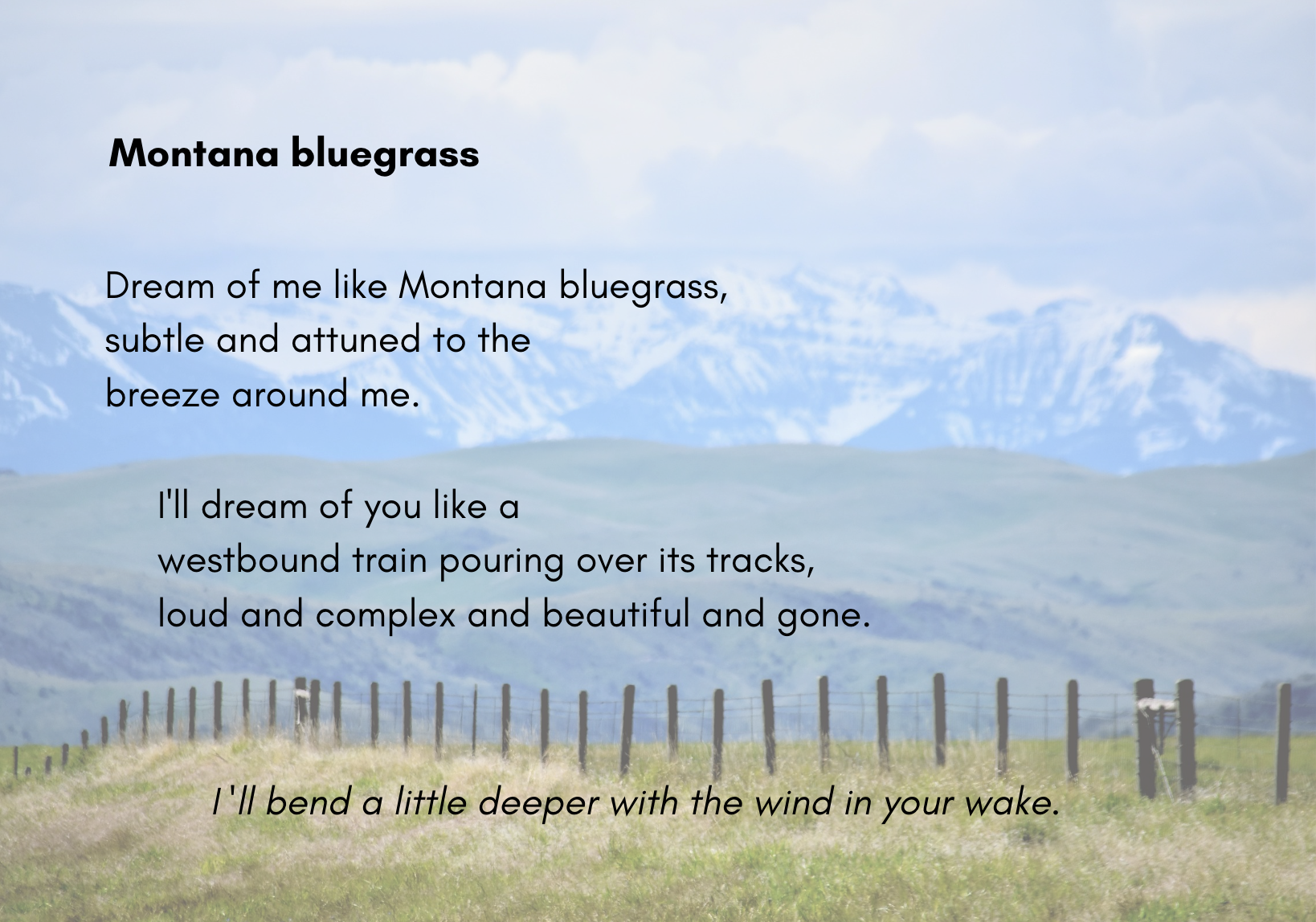
When I think of the first poem I was ever truly, truly proud of, I think of “Montana Bluegrass.”
Incredible! Page 20 in your book. Tell me more about it.
I wrote that poem on a three-day, cross-country train ride. At that point, I had written poetry for myself without much intent to share with the world. But this poem resonated with two distinct selves: writer and reader. For the first time, I really believed in the value of my poetry and knew I wanted to start sharing.
How do you describe your writing process? How do your poems come to be?
Akin to possession! It’s sudden. I get an upwelling of sensation, and I don’t at that point know what words are going to come out, but I know they’re coming. (Possession or vomiting: take your pick.) I have to write the poem immediately. If I don’t, it leaves. Because it’s rapid, I prefer to type—it allows me to follow the flurry of thoughts and lines arising to my surface as fast as possible. I get tunnel vision, and my poor husband often gets politely shushed until I’m done. The poem is usually out between 20-45 minutes later, depending on length. Once that spurt is done, the poem is settled. I might do light tweaks but, because each poem is so strongly tied to what feels like a magic thread that appeared at that moment in time, and because I feel more like a conduit for it than a conductor, I rarely do extensive revisions.
I'd love to hear more about you and your lemon tree. There's this beautiful relationship between you, the artist, and your stewardship of this fruit tree that connects to our conversation about rebuilding, growth, transformation. Could you spill the tea? How's your lemon tree doing?
Thank you for asking about the lemon tree. We should ask about nature and plants more often and how they're doing. She's doing great, she’s doing lovely; she gets shared with all the neighbors. I came into stewardship of this lemon tree when my husband and I moved into this place that we rent. Coming on gosh, six or seven years ago. At the time I certainly liked plants, but I would not have considered myself a gardener. Being a young twenty-something-year-old bestowed with this backyard space and lemon tree, was a practice in stewardship. Like, I need to care for this tree, I’ll feel horrible if I let it die! It quickly expanded from there to I want to understand it. I don’t just want to keep it alive; I want to help it grow and thrive. We moved in about six, or maybe nine, months before the pandemic hit, so in an era where time passed in weird ways, these lemons really became a mark of the passage of time too.
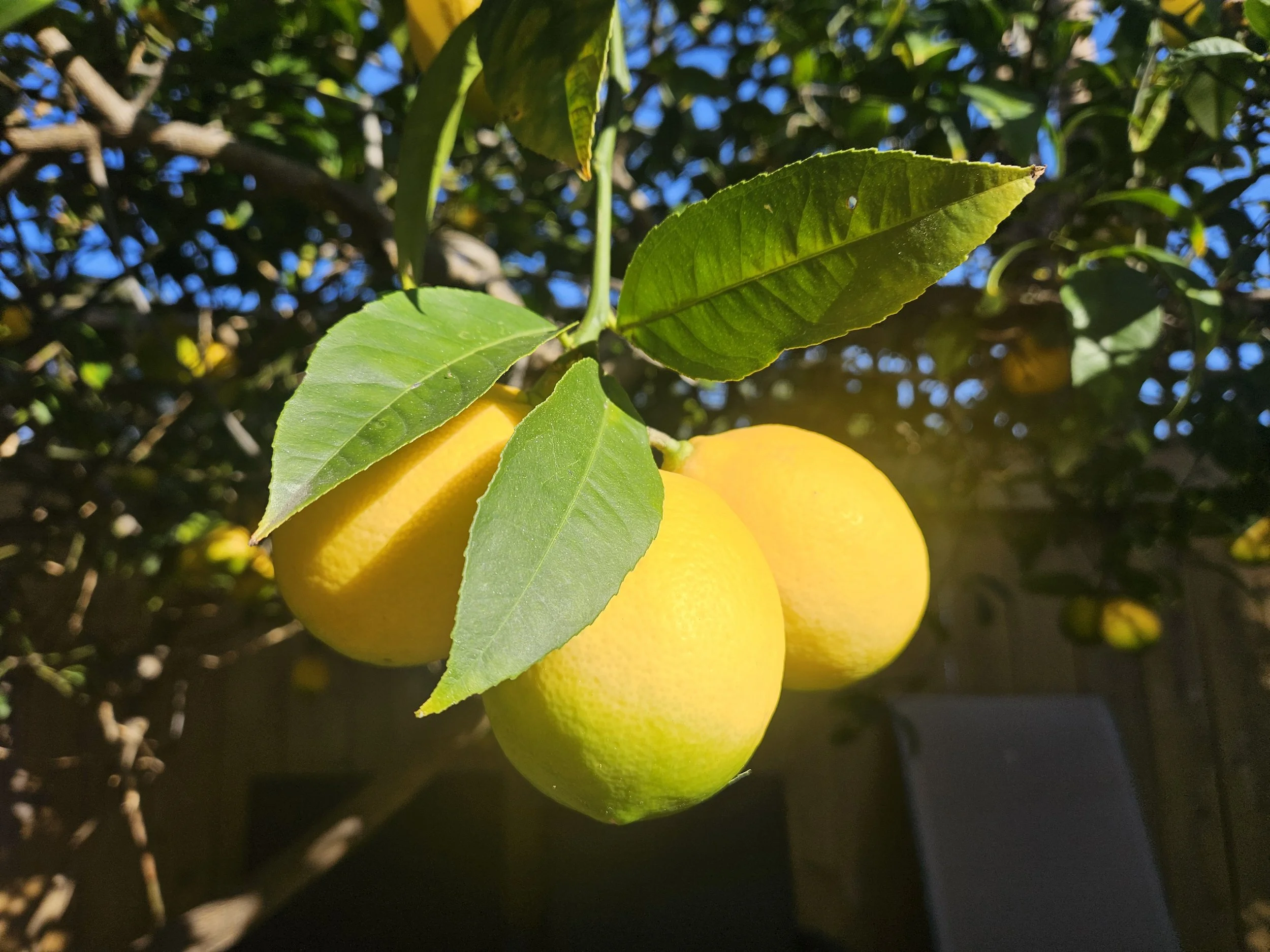
“Lemon Glory” cred. Sarah Durrand
Time was wonky. Absolutely.
Wonky is a perfect word for it. The lemons were this reliable marker of small progress and time. We were moving forward, towards something even though things felt really horrible and stuck. As I continued to care for this lemon tree, I became an avid gardener. The best things I've ever learned and the best parts of who I am are from gardening. I've learned how to plant seeds literally and metaphorically.
How to tend to things, seeing what something needs and giving that, even if that's something is you. I've learned how to help our garden grow, to listen to what it needs to flourish. What I'm learning right now is how to prune after letting things grow and get wild. How do I trim what needs trimming? Sometimes cutting a branch off is actually better for the plant. And please understand everything I just said is literally about the garden, but is also about living as a human.
That’s so poignant. There’s a constant dialectical relationship between humanity and nature. We as a species have done and been done a terrible harm by ourselves in so many ways from nature. So, I find it inspiring to hear you talk about this budding and growing and lasting relationship with yourself and this lemon tree.
One of the really lovely things about gardening is you're out there every day or every other day and there are these moments when you blink and are like, ‘oh it's different out here. That got bigger or oh, that needs trimming.’ There are moments in life where we blink and go, ‘oh how did I get here? This part of me has grown or this part of me has let go.’ I feel extraordinarily lucky to have a physical space that reflects that practice back to me.
What significance do lemons take on as a symbol and motif in What Flowers May Come?
Lemons represent the fruits of our labor, even if we don't fully know why we're doing that labor. Bringing it back to tending, I think that's such an important act and when we tend, we often don't know what the outcome will be; life is the same way. Sometimes the work you put in will come back to you, sometimes it won’t. But hey, what a joy when it does, right? It’s not a guarantee, but there is a resilience in the existence of plants and especially citrus trees.
I think that resilience is reflected in a lot of the poems as far as, you know, life takes crazy turns and then, you come back, and you or the tree are still standing, bearing fruit. The lemons ask me: what can you do with the fruits of your labor? There’s one poem, “Red Admiral,” that talks about giving away all the lemonade you can. Joy, givings in life aren’t guaranteed; they’re fleeting, sometimes seasonal. So, there’s a freedom in just taking the offering when it comes and giving it away when you’re able.
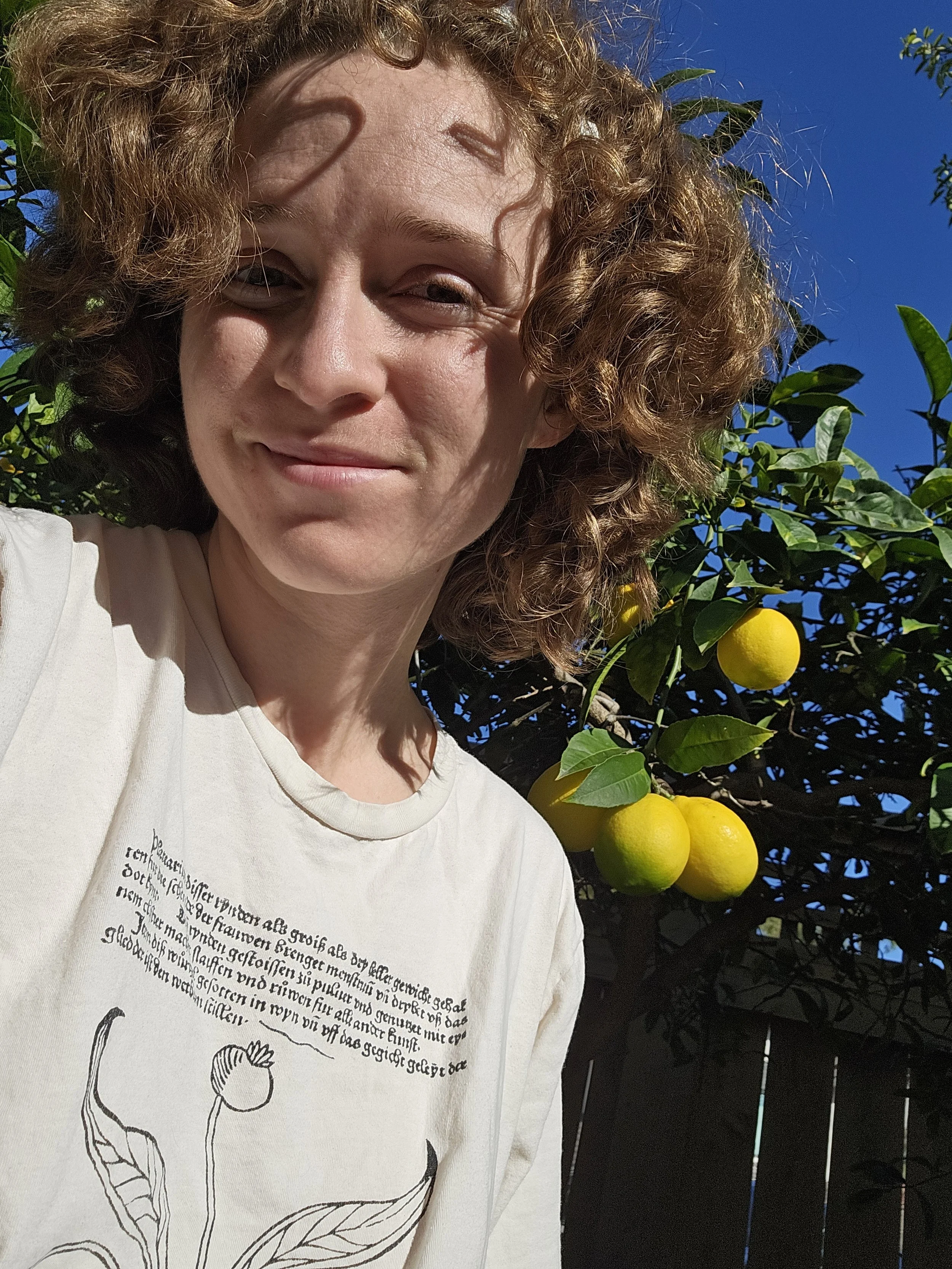
“Lemon Selfie” cred. Sarah Durrand
What you described has me considering the notion of sacracy, or sacredness, evoked in “Red Admiral” and the potency of being present. In your everyday life, how do you commune with the sacred?
Absolutely. I practice meditation and tarot, and I love those things. To me, sacracy can be created, but I think it's best received. There's no surprise from my poems that I love being outdoors, right? I have a lovely canyon by me, I have my backyard, anywhere in the world that has a plant, I'll go. In that poem, I talk of listening carefully, thoughtfully. Intuitively. To me that's the most sacred act. When you talked about earlier actually that you know there's all these things constantly vying for our attention and especially with these, you know—
Our smartphone pacifiers—
Yes! That's a funny term; I hadn't heard that. I think one of the most sacred acts we can do in today's world is to just go out somewhere, where phones and TVs aren't yelling for our attention, and pay attention to the world and listen to what it's saying. If you can tend to it, if you can give to it, if you see that it has needs that you can meet, try to meet those needs.
A Larry King quote comes to mind— I can't tell you why that's in my repository of quotes, but it’s “Nothing I say today will teach me anything, so if I’m going to learn a lot today, I’ll have to do it by listening.” To me, that speaks exactly to the heart of the sacred act of listening and paying attention to the world around you. The natural world inevitably becomes a metaphorical lens for whatever's on my mind. My thoughts intermingle with my environment and the natural world becomes the truth of my lived internal world and vice versa. That's where poetry starts to happen.
Throughout your collection, when I encountered elements of darkness, I was able to trust in the arrival of the sun. Themes of yearning and uncertainty are unified by a particular lightness, levity, and hope. I also found the currents of energy, of eroticism and desire, to be beautifully rendered. What, or perhaps, how is nature teaching you about relationships, desire, and the erotic?
Thank you for the kind words. I mean, we call it the birds and the bees for a reason, right? It's all natural, baby. It’s a perfect segue because the question immediately feeds back into this idea of the landscape as this mirrored canvas. When we’re present with nature, observing a grassy hill or whatever it may be, inevitably our thoughts and desires bubble up within us. So, I find nature to be just this absolutely beautiful canvas where these desires, feelings, and erotic notions can be animated through the world around us. I think that's really fun because you know, nature is lush and beautiful and ample and giving, which is what love should be and not how we always are with our love.
There are interesting parallels between artificial or human-made boundaries and the wildness of nature, and even desire. Like hiking trails through a mountain. That's a fake boundary we've made. There's a reason for that boundary, sure, but like physically, there's nothing stopping us from hopping off the trail and going somewhere else.
In desire and romance—especially in US society—we have these strict, heteronormative, and monogamous expectations, right? But that's simply not how the world or nature works. There are so many ways that people can be special and desirable to you. I think there's a lot of beauty and magic in those in-between feelings, which is where you get a lot of the longing and ‘what if’ exploration in my poems.
What’s the future hold for you? Any upcoming readings or events that you’d like to plug?
I’m currently trying to schedule some readings, so I might have to get back to you on that! Anything will be posted on my website, which is www.sarahdurrand.com. Being honest though, I’m in a period of just celebration at this point. After the last year with almost dying and finally getting this dang book out in the world, sitting in contentment with what has happened and where I've arrived is where I’m at. I planted my seed with the book and now, I’m waiting to see what flowers may come from it.
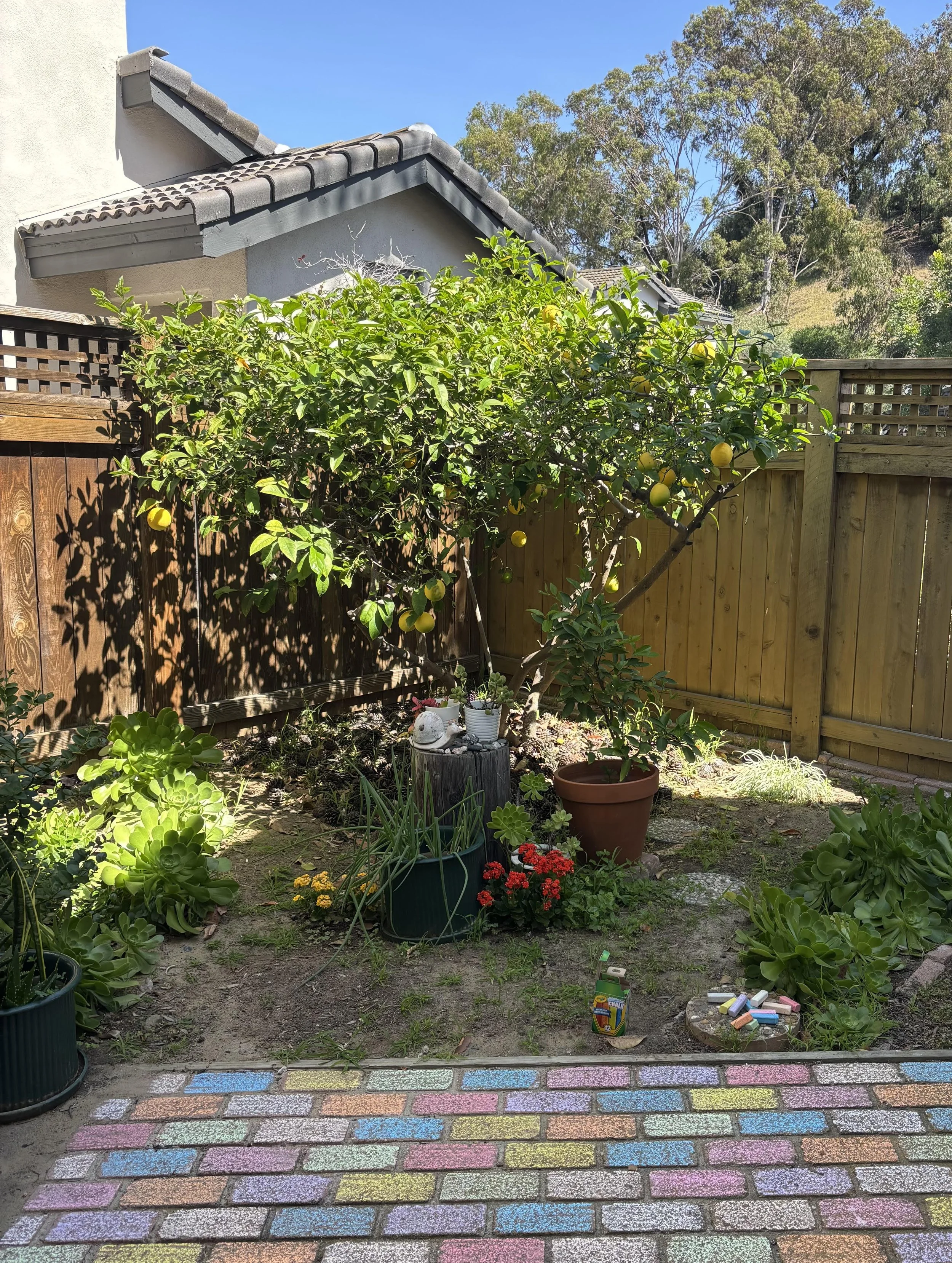
“Lemon Whimsy” cred. Sarah Durrand
Read more of Sarah’s work in Blood Tree Literature Issue 14 Re:Build.
Buy A Copy of What Flowers may come from FInishing line press today!

This interview has been edited for length and style.
Sarah Durrand is a solar-powered poet, novice gardener, and lover of all small critters. When not writing, she enjoys reading, rollerblading, and talking about the birds that visit her bird feeder. She lives in San Diego, California with her husband and a very chatty cat. www.sarahdurrand.com.
Evan C. Loving is the Features Editor for Blood Tree Literature.
A poet, writer, and arts educator from Boston, MA. Evan’s poetry grounds into the senses and natural world. From this foundation, he explores the intimate tensions of the human condition and centers themes of belonging, rejection, lineage, cultural inheritance, Queer love, and ancestral grief. As a storyteller, he is fascinated by myth-making and what’s revealed about the people and cultures who create, recreate, and disseminate them. Whether reflecting the tragedy of Icarus through the lens of Black boyhood or unpacking the traumas and blessings of his heritage, Evan seeks to offer insight and healing through his verse. He earned his MFA in Poetry from Rutgers University-Newark and lives in South Jersey with his partner and their cat. His poems are published in Lampblack Lit, Apogee Journal, Grub Street, Juked, The Offing, Lumina Journal, Wildness x Platypus Press, and others.