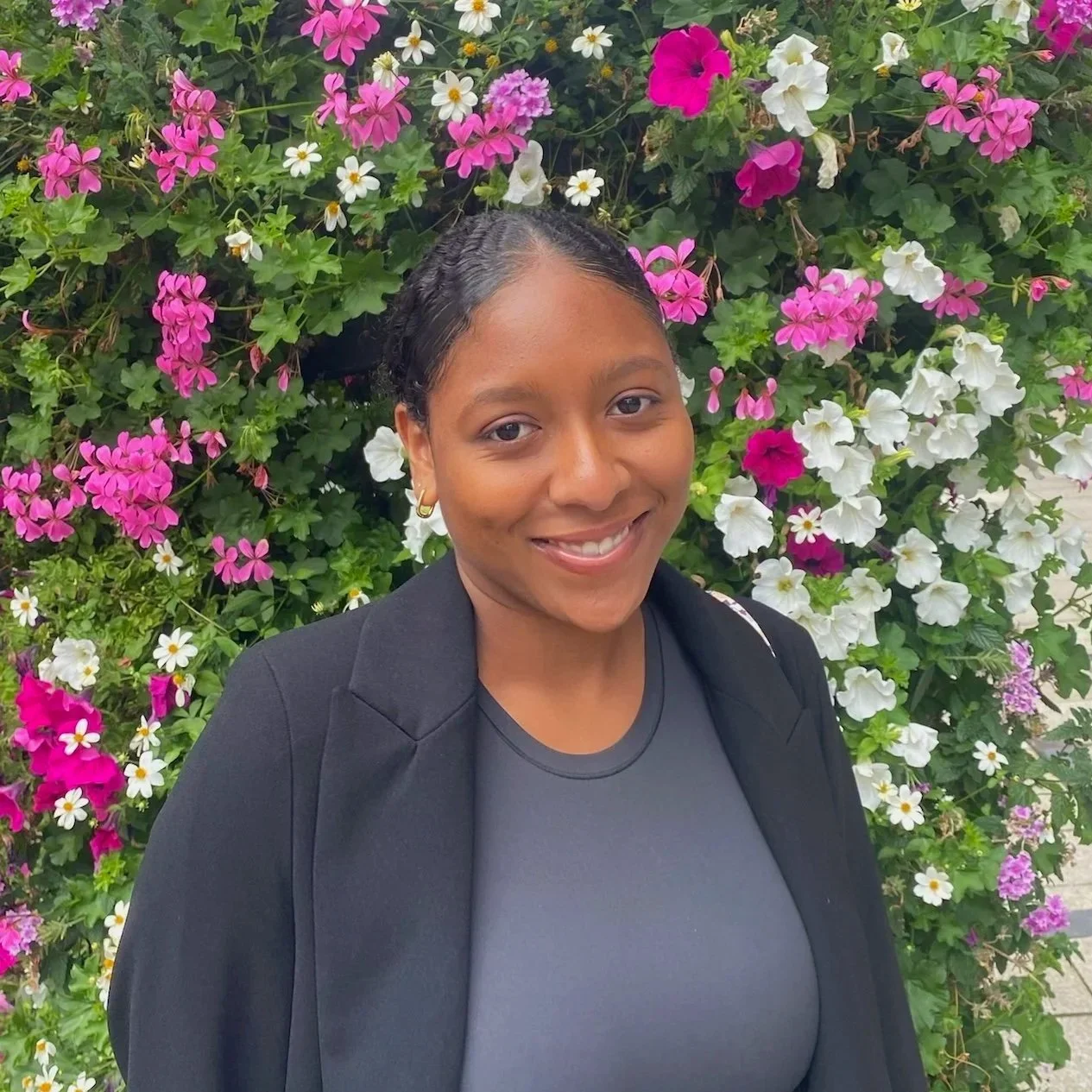
Jessica Whittingham is a 26-year-old collagist from Nassau Bahamas. The daughter of interior designer and architect, developed her aesthetic eye in the thick of showrooms and dream-homes in the making. Known as the crafty kid who always had a weird art experiment in her room, she surprised her peers by pursuing and earning a Master’s degree in counselling psychology from McGill University. Even so, creative expression remained an itch she had to scratch.
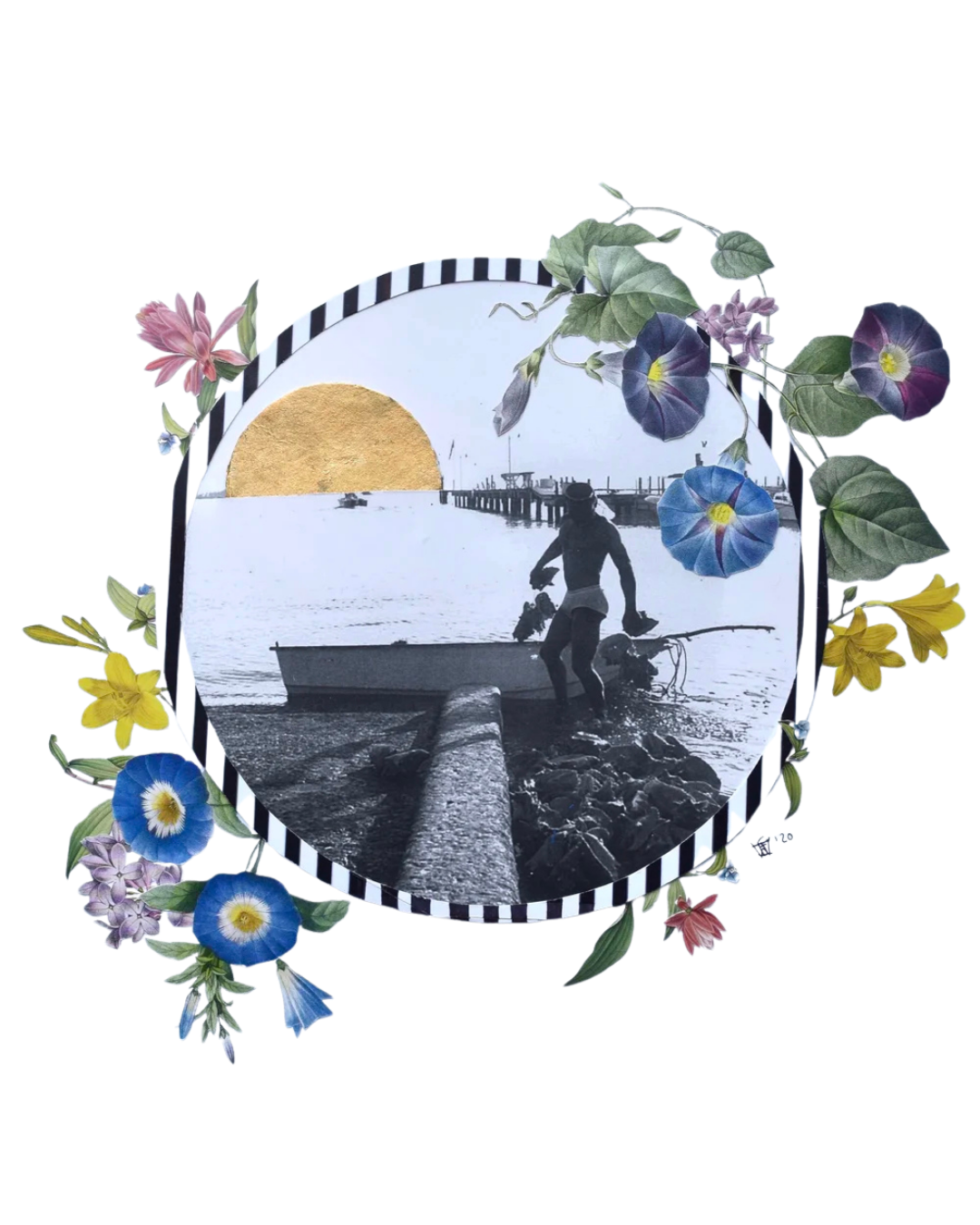
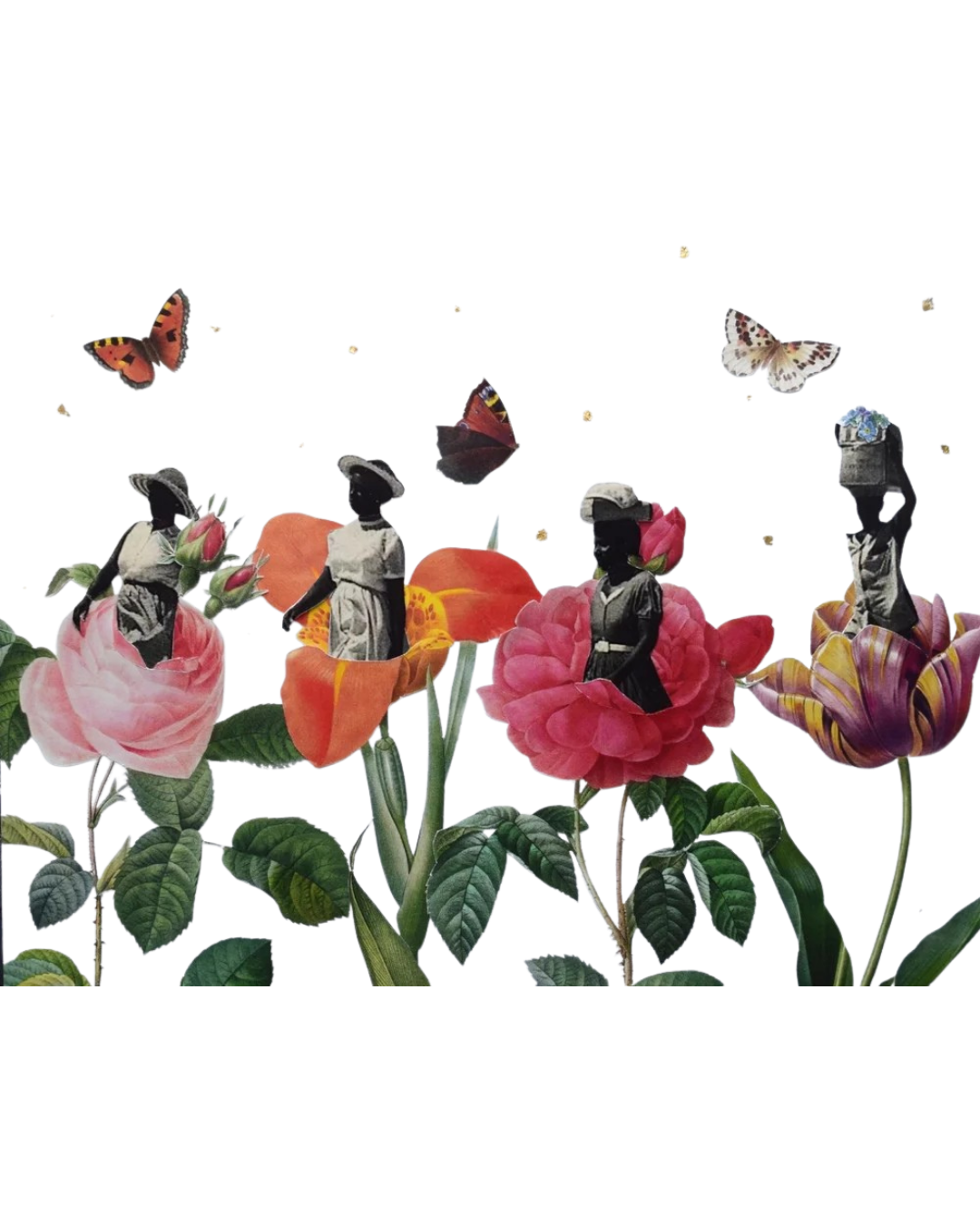
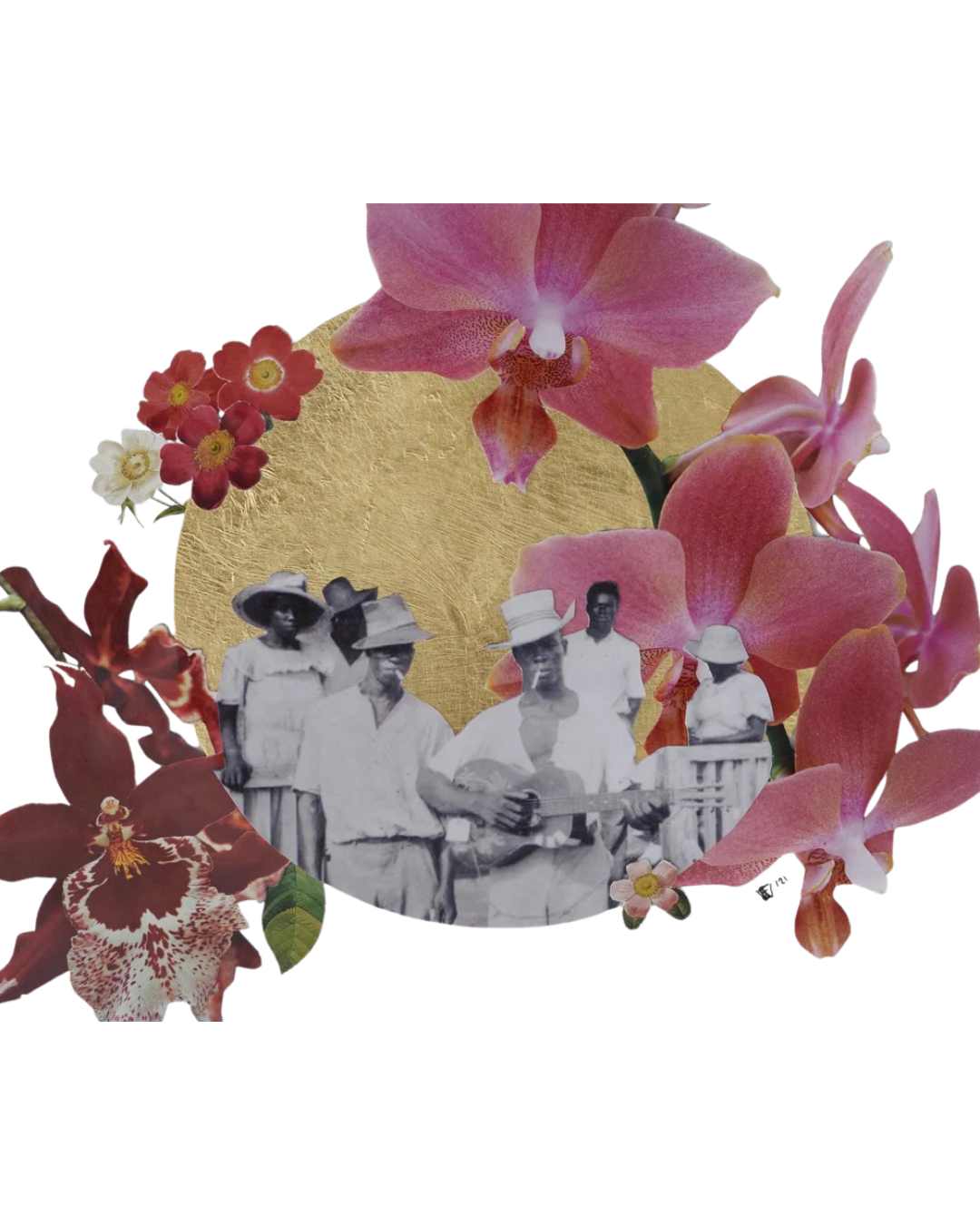
While completing her degree, CAB Gallery and Studio invited Whittingham to showcase her original collages in 2023 and 2025. Her latest exhibition “The Earth and Her Daughters” explores the connection between women and nature. Using mesmerizing textures, bold colors and patterns, and found photos, Whittingham’s art shines a reverent light on the everyday facets of Bahamian life and honors the complexity, energy, and beauty of its people.
Editor’s Note:
An artist is a powerful being. Through our craft we shape memory, catalogue ecosystems of emotion, and nurture whole worlds into being. Among our many gifts, I find one of our most critical offerings is the archive. As a photo captures a moment of time in a flash of light, so too, does the artist preserve a sliver of what we see and feel. The result? Myriad perspectives celebrating the mundane beauty of daily life; novel recollections of histories dismissed and hidden away. When I first came across Jessica’s collage work, I halted my Substack immediately. I thought: ‘Here is an artist whose eye revels in nature’s explosive colors and dynamic textures; here is an artist whose tender portraits reveal within her people a humble yet resilient beauty—a beauty worth preserving eternally.’ To say I enjoyed meeting Jessica and learning about the forces that impel her craft would be an understatement. As we ford into a future overshadowed by the threats of climate crisis, I believe art that seeks honor nature and our relationship with it as simple creatures of earth is more important than ever. With that, I am grateful for the chance to share Jessica’s incredible work and story with you. Enjoy.
— Evan C. Loving
BTL: What were the origins of your collage practice?
Jessica: I was always a crafty kid. I often had some weird experimental art project that I was working on. My parents influenced me a lot, too. My mom is an interior designer and my dad is an architect and they’re in business together. It’s a different kind of art, but is still very creative. Growing up, my brother and I would get picked up from school and taken to a job site where my mom or dad would tell me, “Hold this tape measure.” Or ask “what do you think of this sample swatch?” So, from a young age my brain was primed to consider the artistic value in things.
Although I painted for many years, in 2018 I burnt out on that medium. There was a limit where I couldn’t make the piece look as a real as I wanted. So, I wanted to practice a different artform in the meantime and found my way to collaging.
What was it like breaking into this new art form?
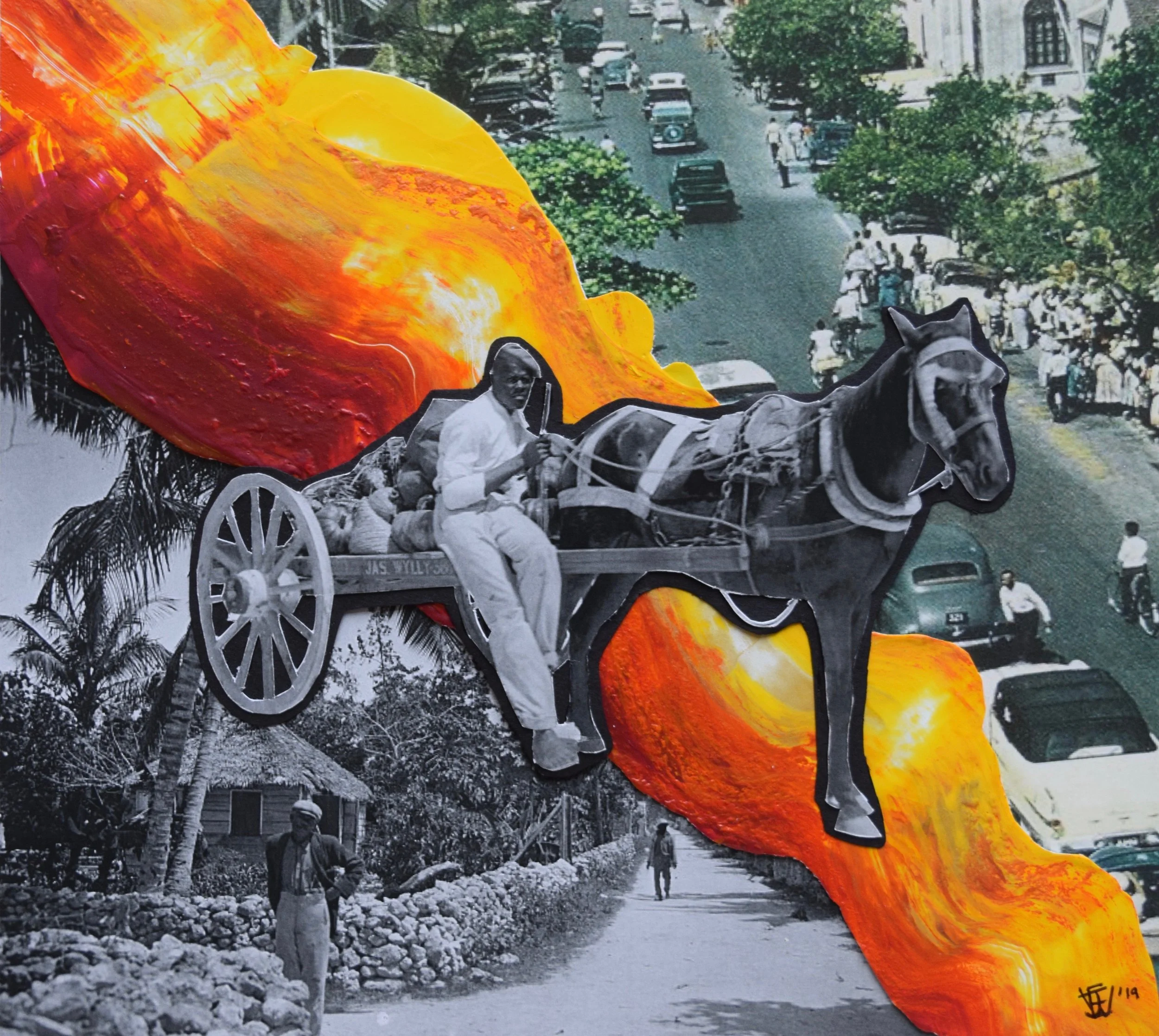
In the beginning, I did what everyone else was doing at the time: using photos from vintage 40s-80s American magazine ads and creating surrealist images. For example, juxtaposing a white American couple from the 40s with outer space behind them. The images were fun, but didn’t really resonate with me. After some time, I started to find vintage Bahamian photos online. My dad and uncle also have collections of photos from when they grew up. So, it was eye-opening to realize that I could use these photos to make collages that are beautiful and meaningful to me. The collages I make know are more culturally and personally relevant. Through these photos, I’m connecting with the living descendants of the people who lived on the same land and cultivated everything I am seeing. It was also interesting to see the effects of colonialism on style, attire, and aesthetics.
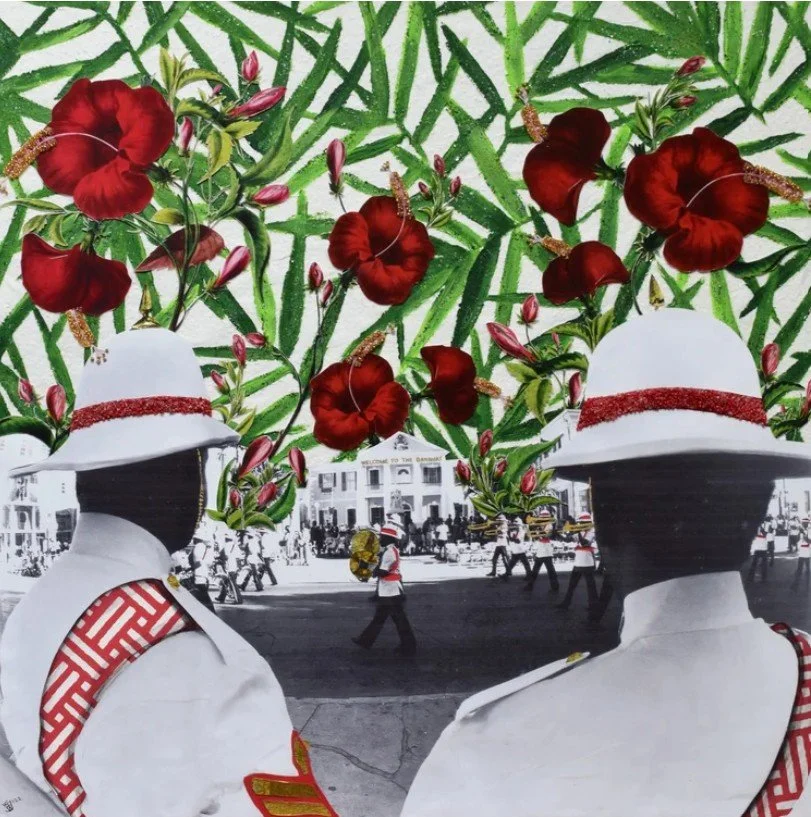
That’s incredible. Your art is uniquely archival in that way and it shows. You have a striking way of blurring the real, the mundane, and the magical. Can you tell me more about why surrealism speaks to you?
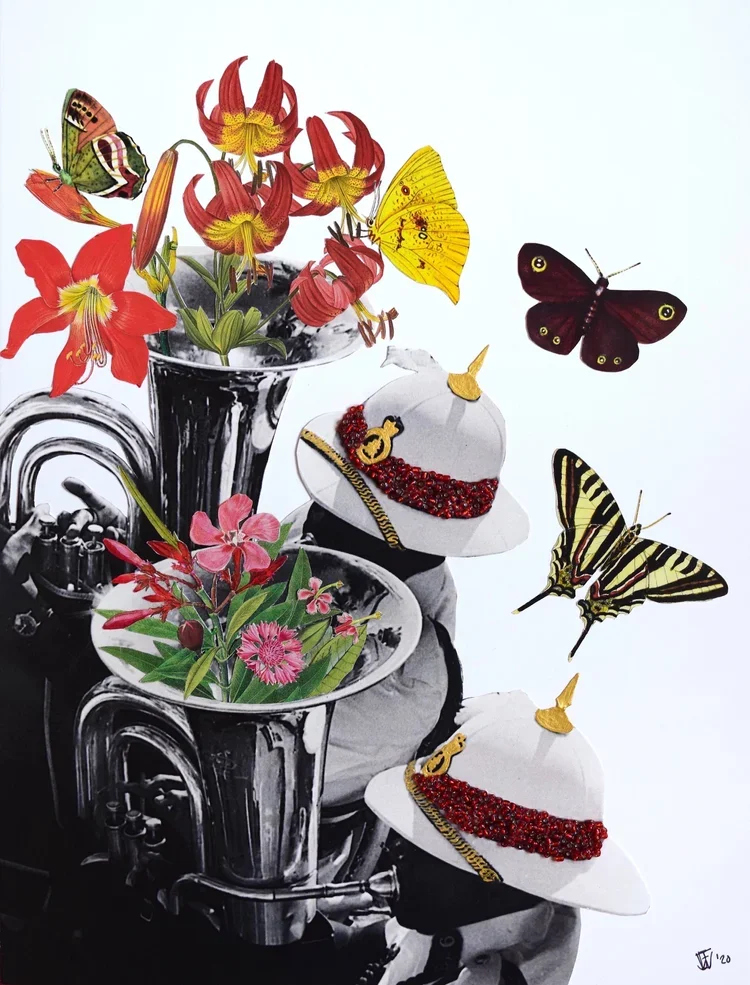
Surrealism is the style of collage that got me started, so it’s familiar. But more than that, I love the whimsy of it; I think it’s a fun world to live in. Surrealism allows me to play with colors and textures, to explore realism and symbolism, and to juxtapose natural elements with vintage ones.
How would you describe your collage style?
I’m a maximalist at heart. Very much a ‘more is more’ person. I love to add texture and to make visible the creative elements of nature. I like to go in my yard and I like to play beads and funky papers, to get coconut thatch and flowers from the yard and sand from the beach to mix with paint because if you were to drive anywhere on this island, every house is vibrant. Drive down any street and you will see the most absurd color houses: neon green next to bright yellow or pink. It shows character and everyone here has such character.
Just the other day on the beach, my friend and I were reading when this guy hollered, “Hey, we‘re cooking fish! Y’all want some?” Everyone's energy is like that, so I like to capture that energy of the people in my work. Everything is just in full color and energy. Even now, I’m looking at the bright orange poincianas in bloom. With all of that, I can’t make a dull piece if I tried, it just doesn’t feel right to me.
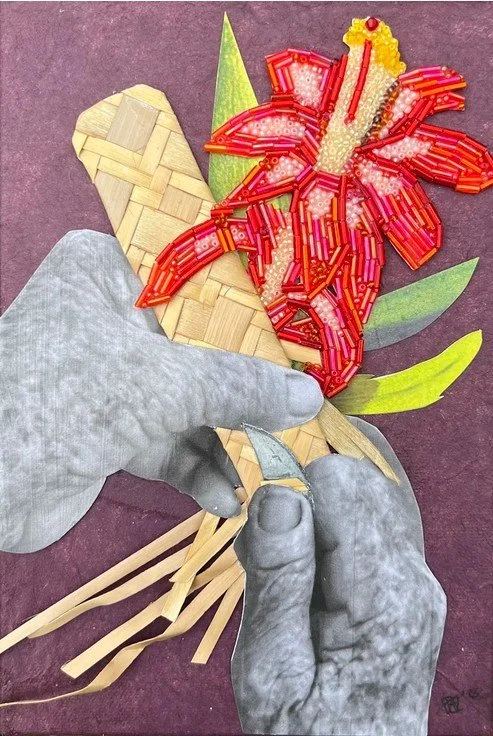
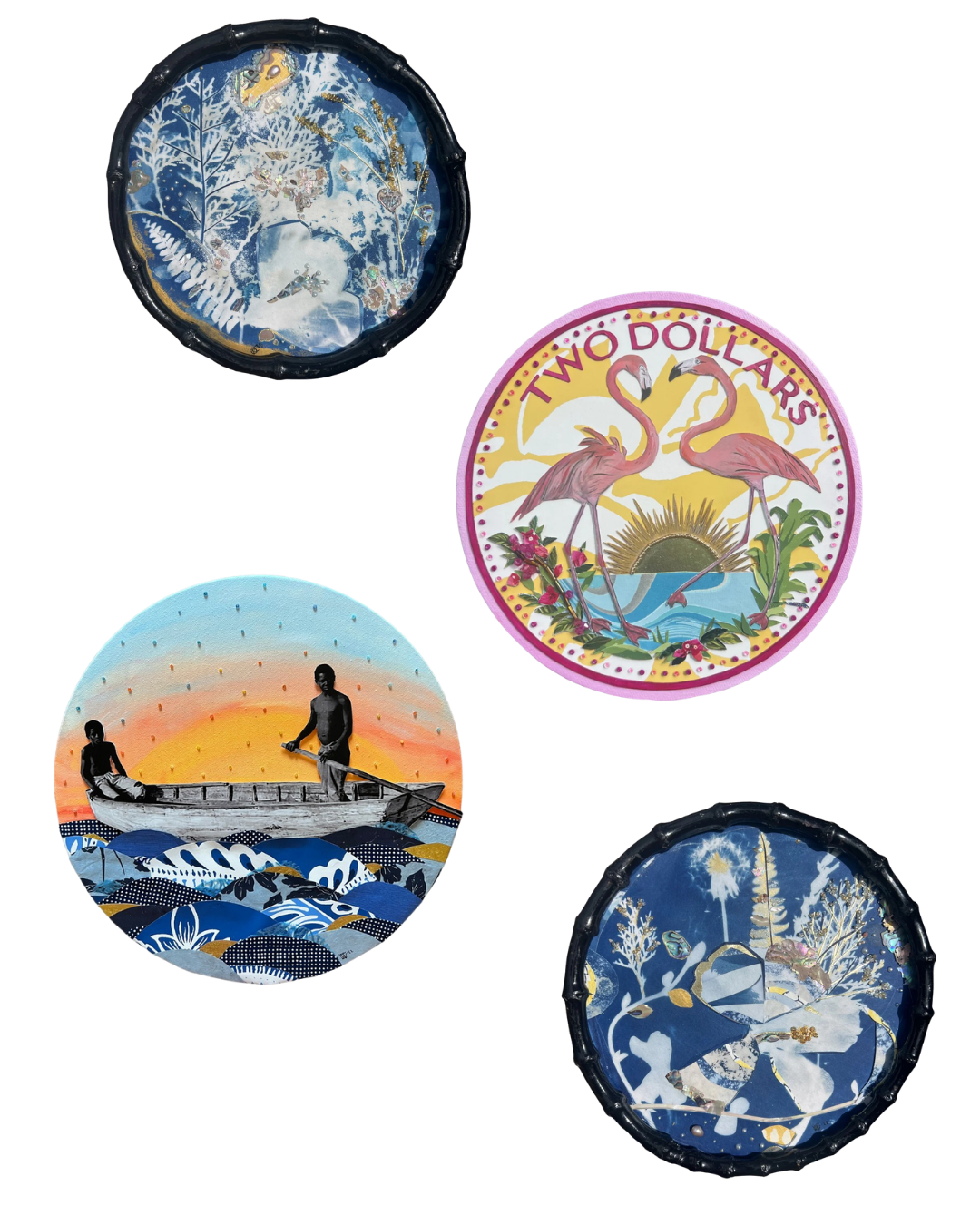
“Plaiting 2” (2025), mixed media on canvas
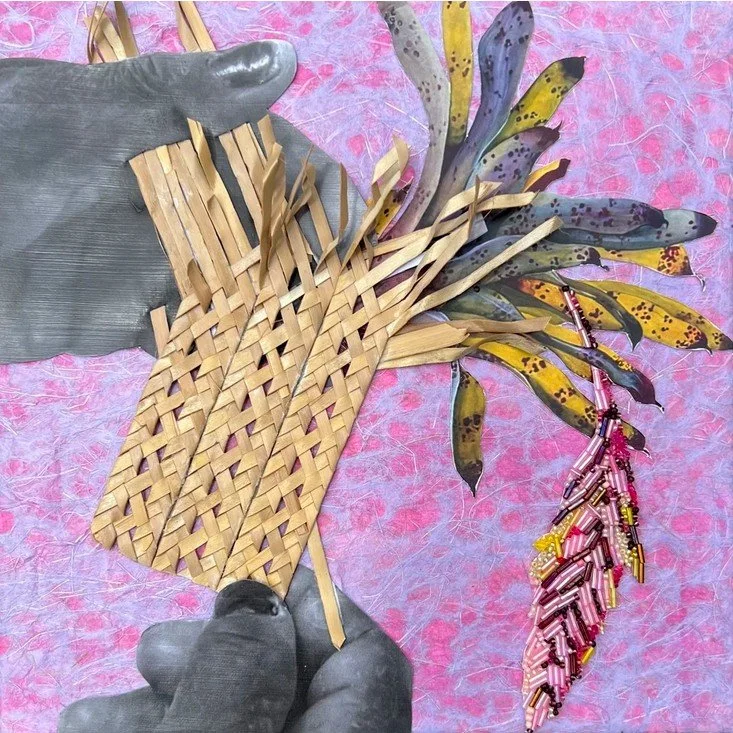
“Plaiting 1” (2025), mixed media on canvas
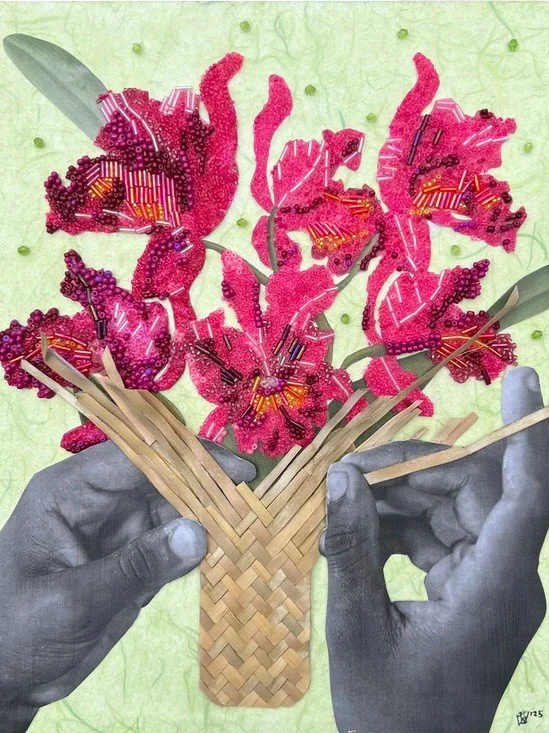
“Plaiting 3” (2025), mixed media on canvas
Described as “situated at the intersection of blackness and nature,” Your work evokes a reverence for the mundane aspects of Bahamian life. What about those subjects inspire you?
Focusing on the natural beauty of the Bahamas and Bahamian life is how I reconnected with my home while completing my undergrad in Canada. While making art and doing commissions, I was intentional about evoking home and it helped me to appreciate the Bahamas more when I returned. I find a lot of solace in nature, so returning home and feeling more in sync with my environment felt like a breath of fresh air.
As an island nation we are quite dependent on nature for our income. From fishing to agriculture, bush medicine, most facets of our life are nature-centered. The more we globalize and adapt to modern times, the more we move away from nature, of course. But no matter where you go on the island, you’re still surrounded by nature. We are of nature and coexist with it and I like to reflect that relationship in my artwork.
I consider what you’re describing to be an artistic symbiosis between the natural scenes, colors, and elements of the Bahamas and your subjects, the everyday people. It’s beautifully rendered. And again, archival—of the moment, yet still carrying the legacies of Bahamian people and culture.
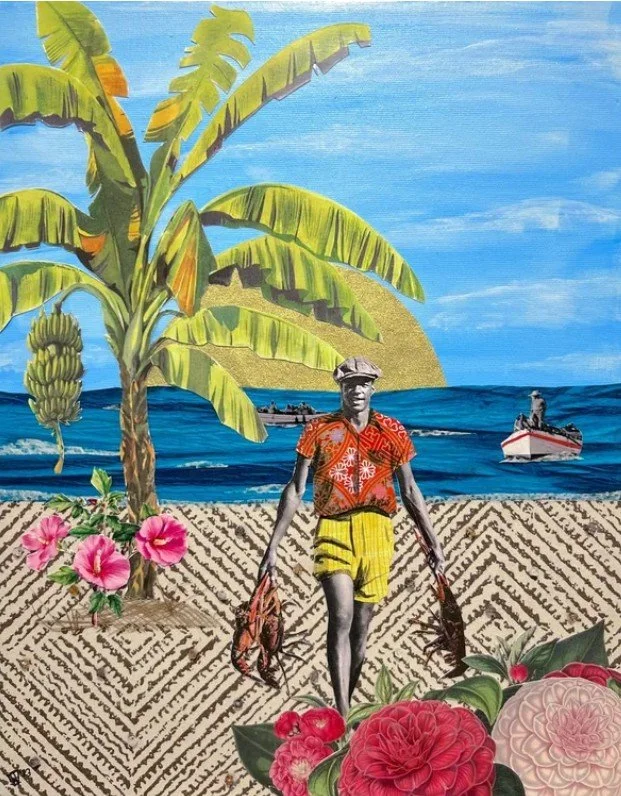
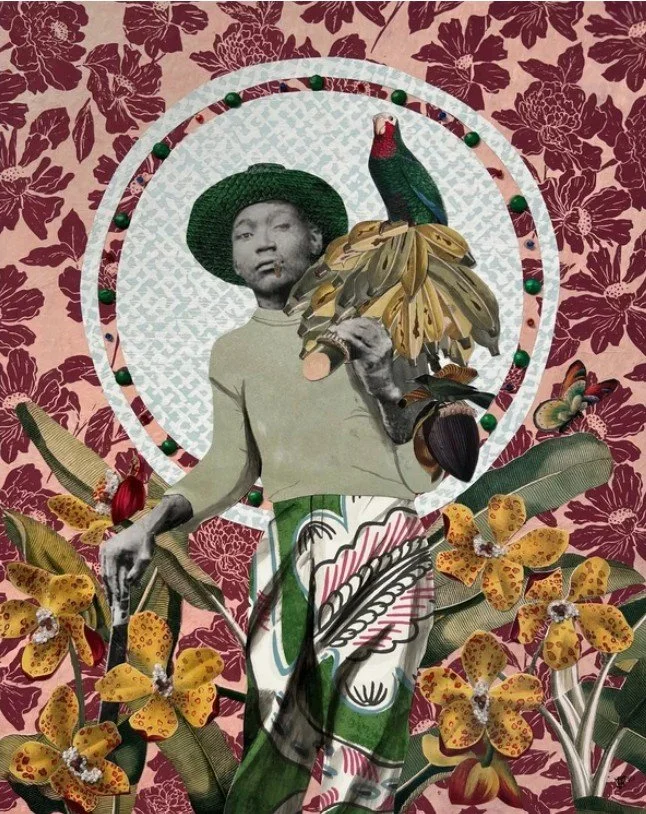
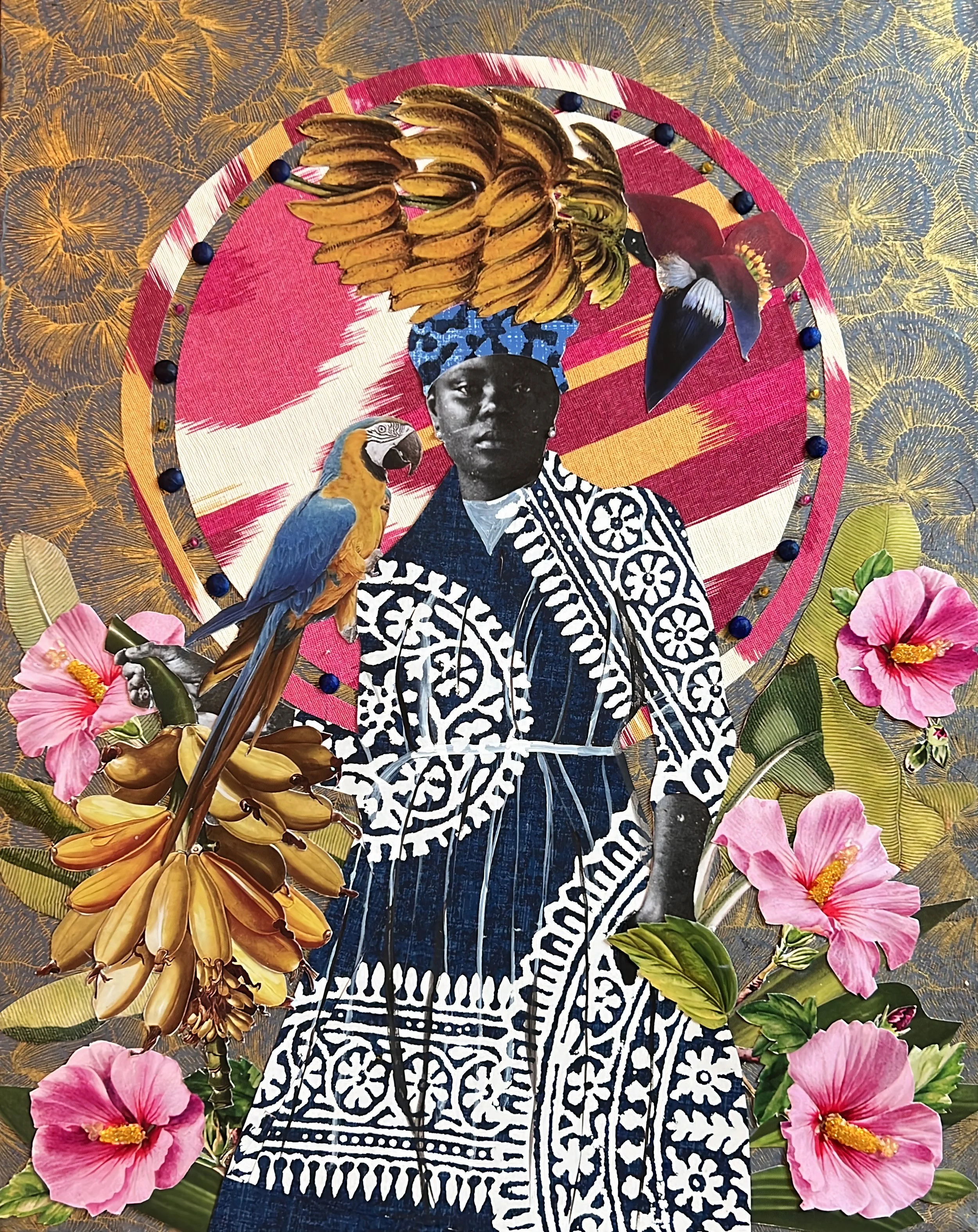
As someone from the United States who, as a youth, vacationed with family in the Bahamas and then grew up, I learned a lot of misconceptions about the Caribbean. Many paradoxical views. On one hand, many consider the Bahamas to be romantic and idyllic. While others regard similar nations in the same region as barbaric or “third-world.” Both views perpetuate cultural stereotypes and ignore the complex realities of Caribbean life, history, and culture. How do you challenge or engage with those narratives artistically?
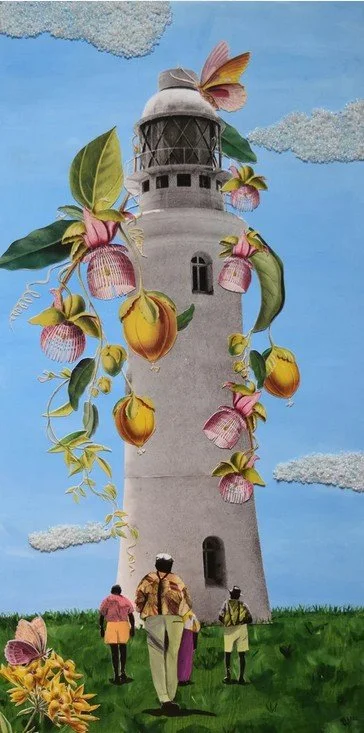
“Overgrown” (2022), collage with acrylic and beads on wood panel
It’s difficult, and a common topic among my friends and young people here. One of our main income sources is tourism, alongside banking and fishing. Two of those things involve foreigners as a key element of how we make income. And since COVID, tourism is through the roof, which is a double-edged sword. I want people to enjoy what my country has to offer, but at the same time most Bahamians can’t access that degree of leisure or luxury. That’s where the post-colonial facet comes into play. Yes, we’re a free nation but we also at the mercy of foreign income. There’s hardship that exists behind the scenes, that isn’t shown in the front-facing images of beautiful idyllic beaches. Gentrification affects locals here, like so many places in the world. At the end of the day, it’s the people of the country who are facilitating “idyllic” experiences for foreigners. And it feels bad to know that the average Bahamian is barred from those experiences while they are creating it for a tourist.
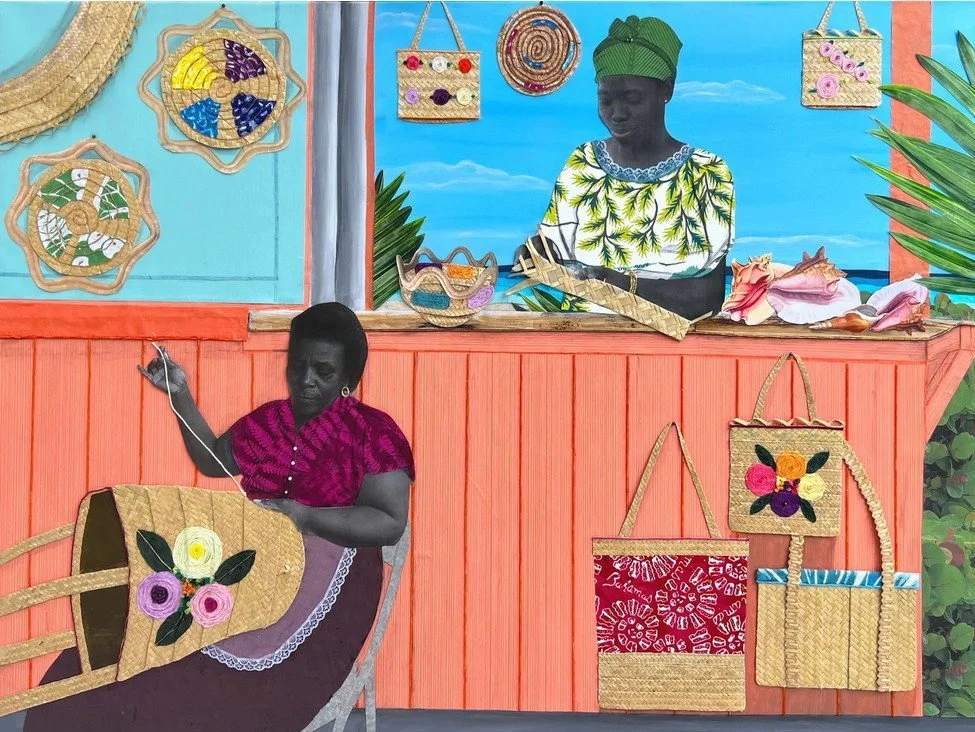
I challenge that dynamic by focusing on mundane scenes and average experiences in Nassau. I travel to places tourists would never see advertised on flyers because it’s the “dirty” part of town and take photos of people walking, taking their kids to school, or running errands. It’s authentic, it’s real life. Not just sun, sand, and sea. It’s where people go to make ends meet. I don’t want to showcase what’s already in the travel ads. It’s more important to me to beautify real life, to put color to it and make it something to be revered. I focus on Black bodies for the same reason. We’re a majority Black country and that should be recognized.
Absolutely. What’s more, I consistently feel a sense of tenderness in your collages. “Sweet Love” (2023), for example. A young couple, in front of vibrant pink and blue homes, dances underneath larger-than-life mangoes. How touching. It reminds me that Black is beautiful—that nature is abundant and overflowing.
“Sweet Love” (2023), mixed media collage on canvas
So last year, you spent a few weeks in Greece for an artist residency. What was that like?
Yes, Eutopia Art Residency in Kavala, Greece. It was a great experience. The town was wonderful and my cohort was too. It was an all-women’s group and we were from all different parts of the world. It was really a sweet and healing time. I had a little apartment to myself for three weeks and was given the go-ahead to make whatever I wanted. There was a showcase at the end, but the program itself was open-ended. Plenty of time to think and be and to try new things. Kavala’s architectural style and natural scenery was inspiring and I incorporated certain elements into my showcase piece. The experience helped me to explore new techniques and switch up my style. It can get really mundane to create in the same way over and over. So, I worked on piece that involved painting the shadows of plants, returning to the canvas, shifting it and then painting the same shadow, layering each one on top of the other as a backdrop for my collage. It’s a concept I wanted to try forever, and I finally did.
We are of nature & coexist with it
🥭
We are of nature & coexist with it 🥭
How wonderful. Sounds like a spiritual reset as well as an artistic one. On the subject of exhibiting your work, I want to ask about your latest show: “The Earth and Her Daughters.” What was it like compiling that collection? Has its meaning or significance to you shifted in the time since the gallery show?
So, “The Earth and Her Daughters” was my second ever solo exhibition with CAB gallery in Nassau. My first, “It Takes a Village,” was in 2023 while I earned by Master’s in counselling psychology. I was going through it mentally at the time and when I returned home to do the show, I had this terrifying “aha moment” realizing “Oh no, my worries are true: I gotta do art, I can’t turn back. Which was nerve-wracking. I went to the gallery worried that I couldn’t follow through and that the show would be a disaster. But the gallery owner was so supportive. She encouraged me to give it a go and helped me realize that if I didn’t try, I’d always wonder “what if?” Besides, I still had the option to complete my Master’s, which I did, so I have something to fall back on.
All of that established the scene for my second show, which was my first show since moving back home post grad. I was processing what it felt like to be back home, reconnect with nature, and my personal spirituality. I realized that the connection I have with nature as a woman is something we Bahamian women share, so I wanted to highlight that and the cyclical nature of growth, death, and rebirth. It’s also about sisterhood, self-love, and connection in general. That collection is the culmination of about a year and half of translating these feelings and ideas into my art. It’s something just for us ladies.
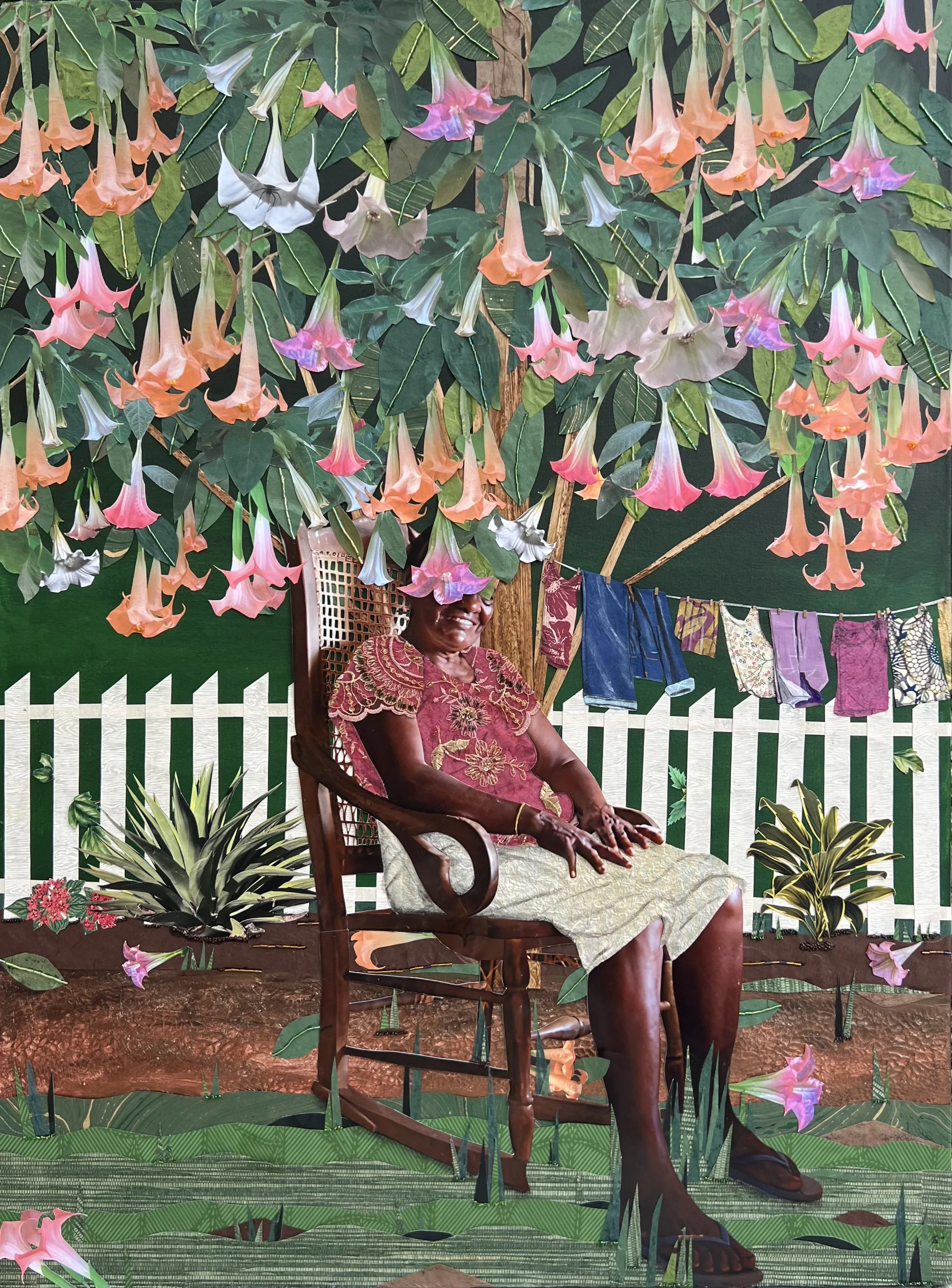
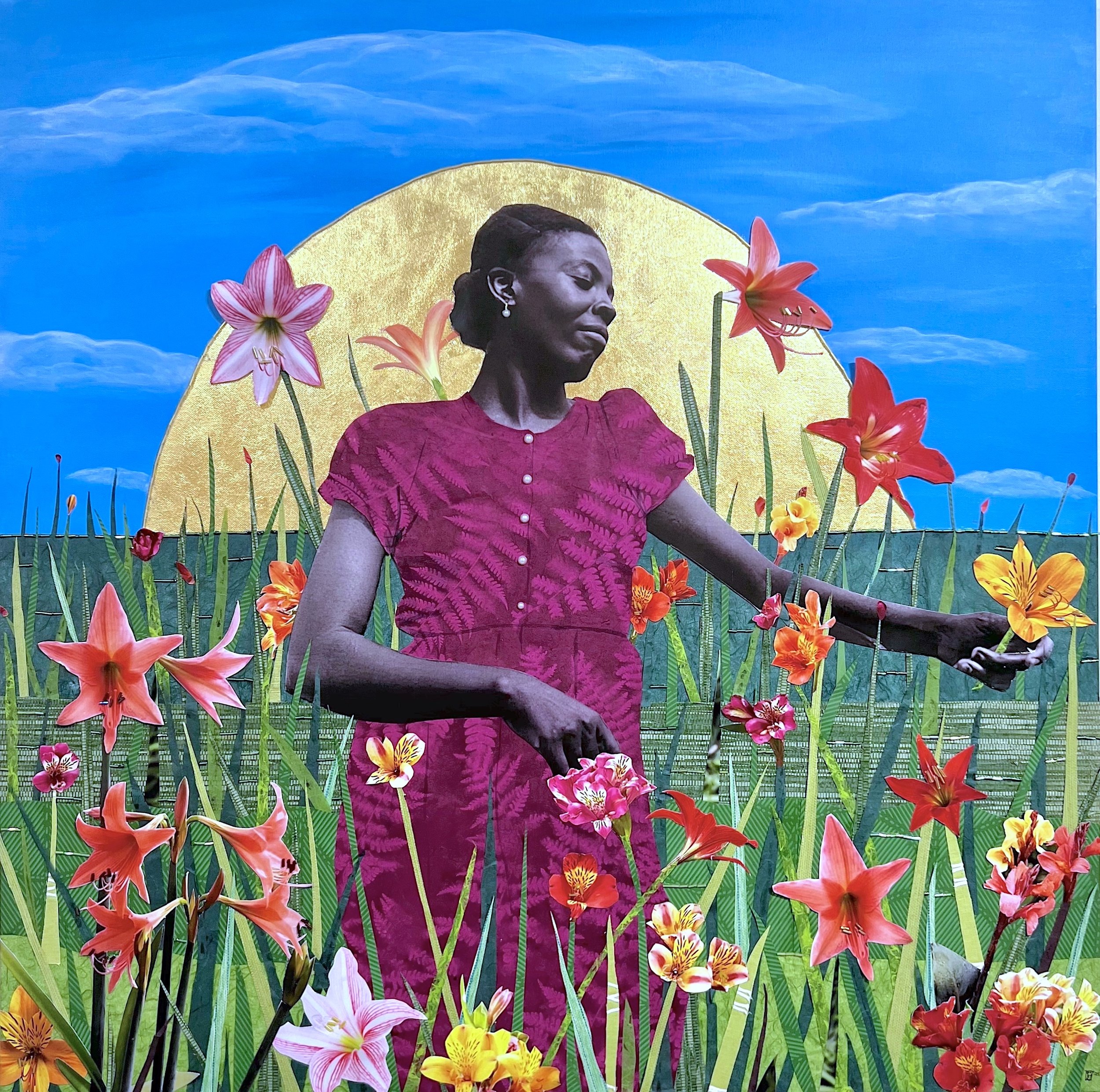
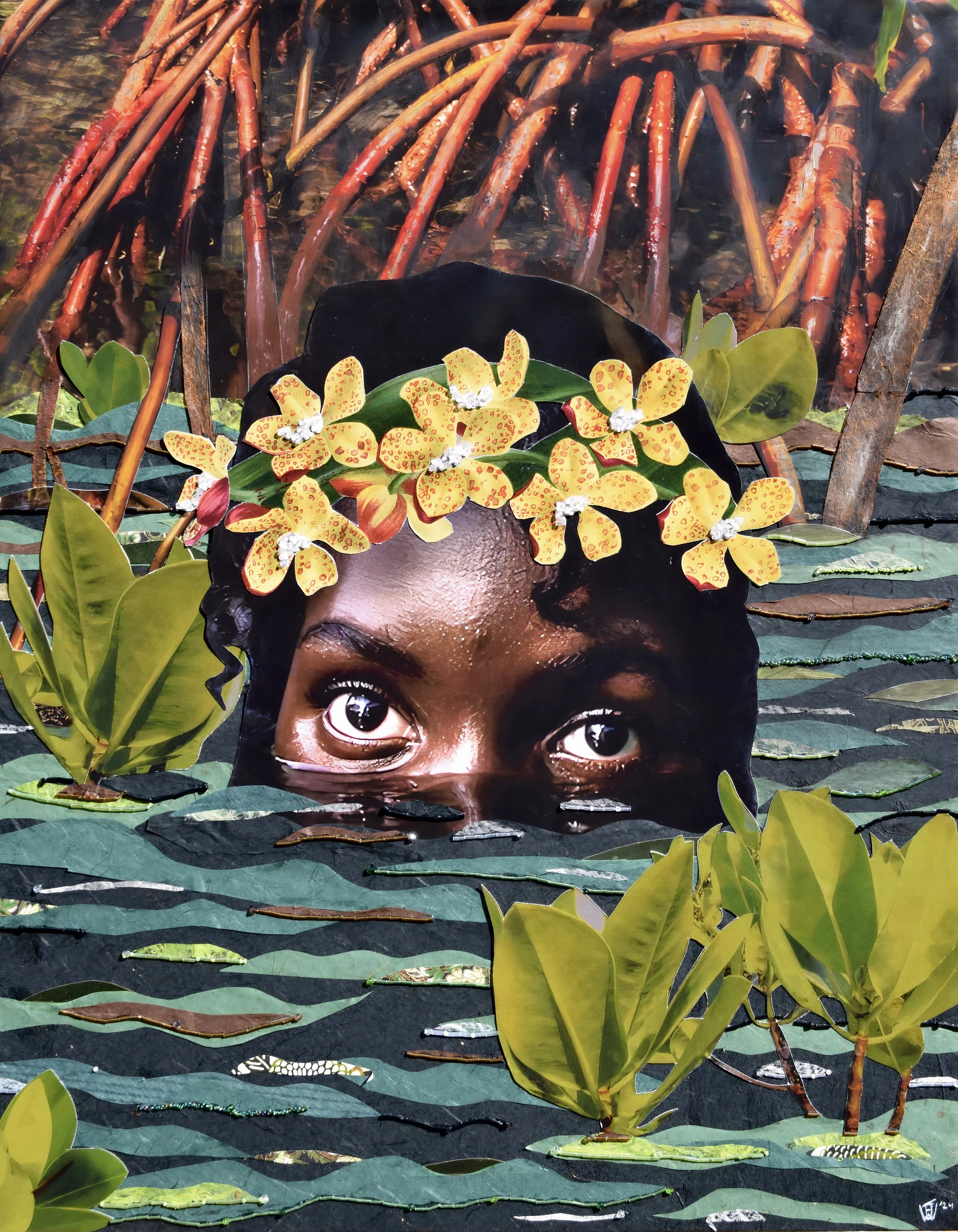
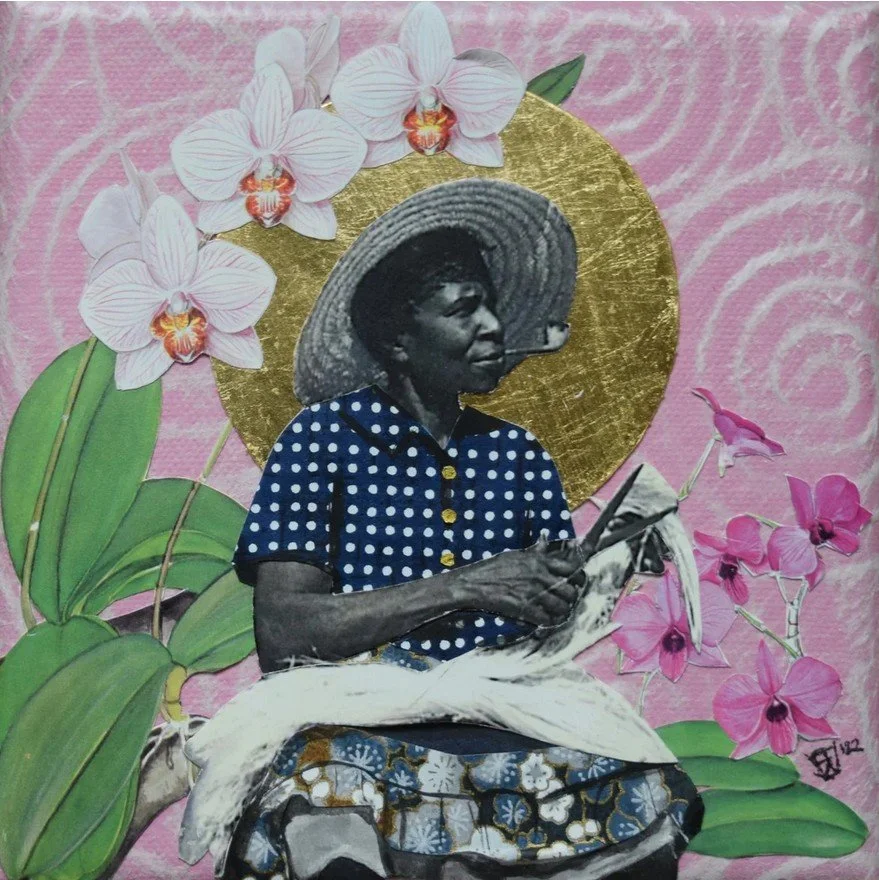
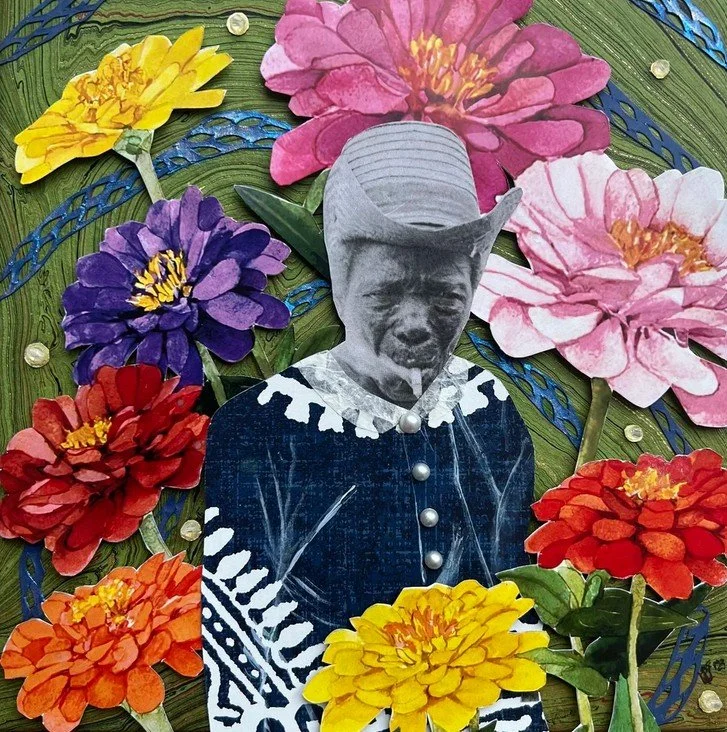
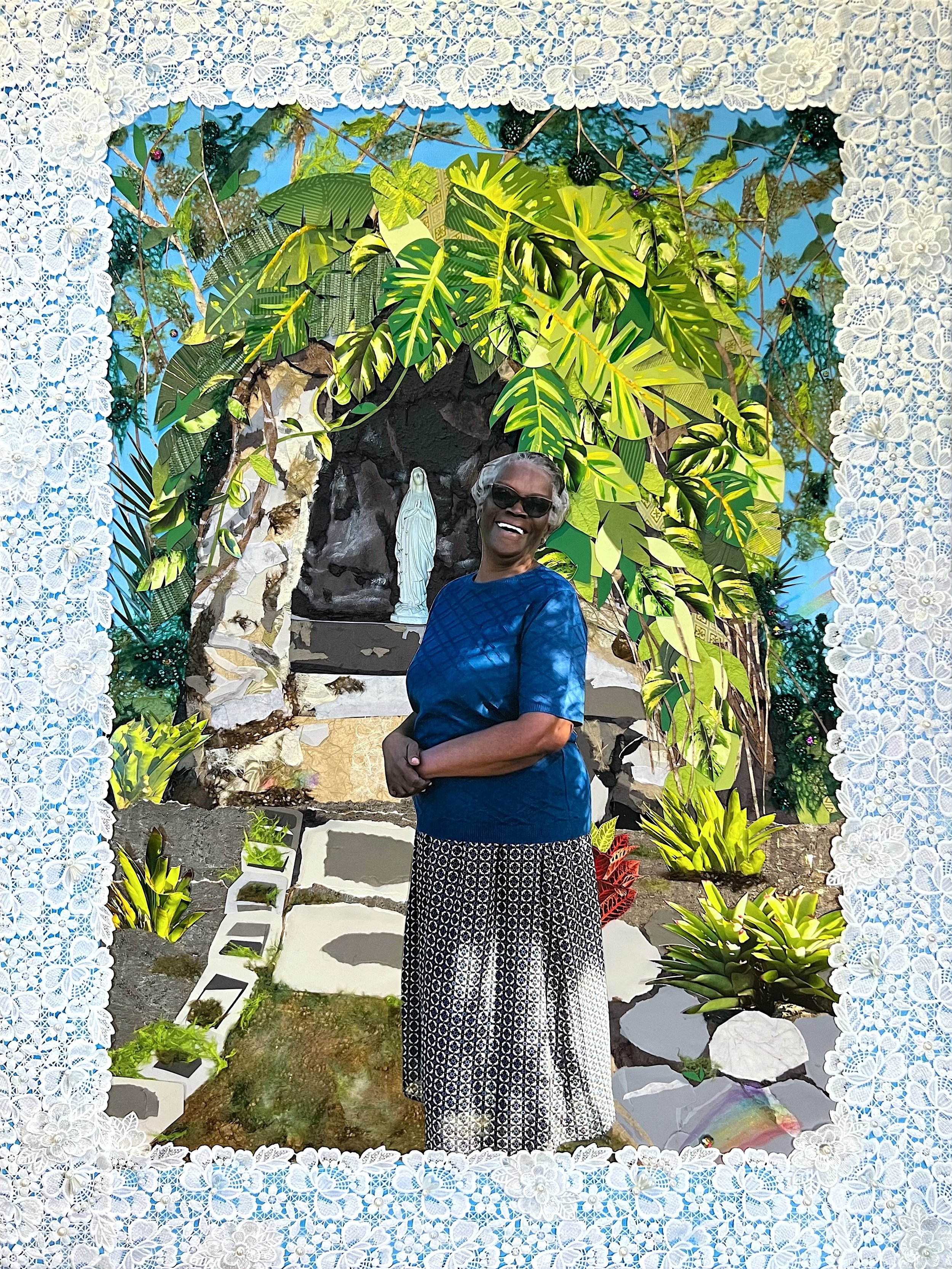
“Sister” (In Progress)
That's beautiful, thank you. What’s on the horizon for you? Any upcoming projects or exhibitions?
I’m working on a portraits series of elder Bahamians and interviewing them to gather their stories. The first portrait is of a nun at one of the convents here that my mom's doing pro bono work for. My mom brought me in to do organize their artwork for them and I developed a relationship with one of the sisters, I asked to interview her and take her photo. It just lights me up to be able to merge my two worlds, to use my background in psychology to interview people and collect their stories while making art. It’s also important to me to preserve a connection to our history and traditions. I consider myself an old soul, though I’m not a very traditional person, but like I said earlier, as a culture we’re modernizing more and getting away from certain traditions. Elder Bahamians like this sister know so much and grew up in a completely different world. In her lifetime we were ruled by the British and so much has changed post-independence. So, it’s important for me to gather these stories and portraits for our own remembrance.
That is fantastic and I'm super excited to see what comes next in the series. The archival work that you embed in your art is significant. Really, I believe one of the most valuable things an artist can offer to the world at large is an archive, an artifact of a people, a moment in time, a feeling. Thank you and best of luck.
You can find Jessica’s full portfolio at
and follow her Instagram.
This interview has been edited for length and style.